9/12/2025
Terrestrial
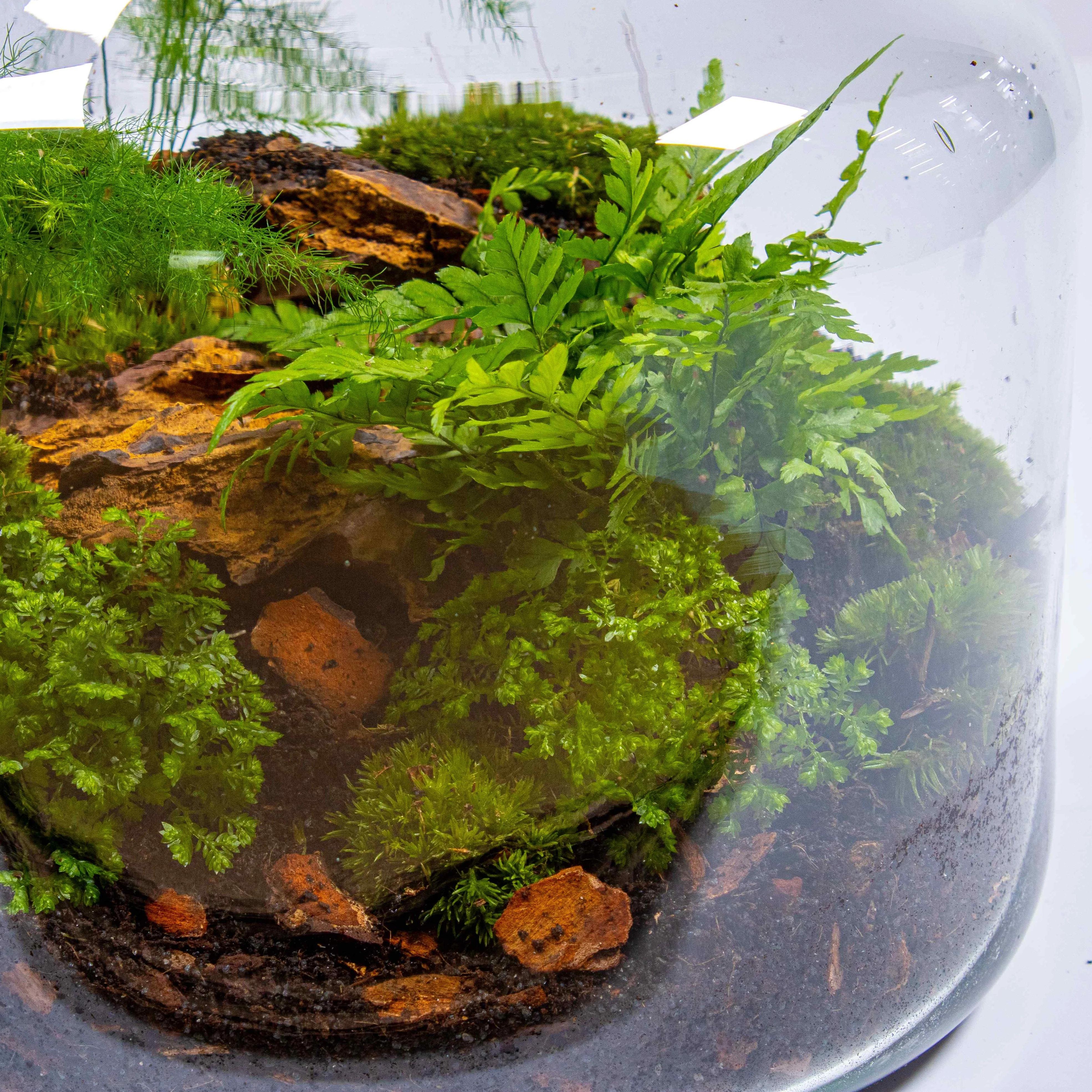
Every terrarium, big or small, beautiful and overgrown, must start with the earth. My first step is to make a layering of aquarium gravel on the bottom, coarse sand as the next, and finally both a substrate mix, as well as a red mud you can find just about anywhere with a good enough eye. The reason for the specifically red mud is because I want the terrarium to be extremely vibrant. By upping the hues’ saturation, or by making “the red more red” so to speak, it will highlight the green of the plants, making them appear more green than if they were just outside. This is the very foundation of color theory, which I will cover more in the foliage section of the project.
Really, what I want most from the terrain planning of the terrarium is not only the color, but the smell. Realistically, the environments that the Tyrannosaurus Rex lived in were thick, acidic forests, considering the amount of Coniferous trees that populated the area. Not only is the color important, but the earth adds more than people may consider, like the smell. Wet, open bark, the sound of the runoff of leaves, sinking into the dirt and mud, running deeper yet deeper into earth, drawing out smells and sights and noise. That's what I aim to capture with my choice.
Terrestrial
Every terrarium, big or small, beautiful and overgrown, must start with the earth. My first step is to make a layering of aquarium gravel on the bottom, coarse sand as the next, and finally both a substrate mix, as well as a red mud you can find just about anywhere with a good enough eye. The reason for the specifically red mud is because I want the terrarium to be extremely vibrant. By upping the hues’ saturation, or by making “the red more red” so to speak, it will highlight the green of the plants, making them appear more green than if they were just outside. This is the very foundation of color theory, which I will cover more in the foliage section of the project.
Really, what I want most from the terrain planning of the terrarium is not only the color, but the smell. Realistically, the environments that the Tyrannosaurus Rex lived in were thick, acidic forests, considering the amount of Coniferous trees that populated the area. Not only is the color important, but the earth adds more than people may consider, like the smell. Wet, open bark, the sound of the runoff of leaves, sinking into the dirt and mud, running deeper yet deeper into earth, drawing out smells and sights and noise. That's what I aim to capture with my choice.